 By Melissa Albert, Relocation Specialist
Should you move to Bowling Green? The direct answer
Moving to Kentucky can be one of the best decisions you ever make, if you are moving for the right reasons. But that honest first sentence has a second half: some people should not move here, and it is kinder to say that plainly than to talk you into a house that does not fit the life you actually want.
Kentucky is not just cheaper houses. Kentucky is a lifestyle shift. If you are not honest about what you want your day-to-day life to look like, you can end up buying a house that looks perfect online but feels completely wrong once you are living in it.
This guide is not here to talk anyone into Kentucky. It is here to help you figure out whether Kentucky is actually the life you are trying to build.
Don't move here if you need big-city convenience every day
If you are coming from a place with five Targets within ten minutes, every restaurant imaginable, major concerts every weekend, multiple airports close by, and every service available instantly, parts of Kentucky may feel like an adjustment.
Kentucky has great restaurants, shopping, and things to do. But depending on where you move, life may become less about constant convenience and more about rhythm: you may drive a little farther, plan ahead a little more, and not have everything five minutes from your driveway.
Some people want exactly that. They are tired of traffic, noise, and living on top of everybody. Others say they want peace and quiet but really want a big-city lifestyle with a country view, and those two things do not always live in the same zip code. Ask yourself: do I really want slower, or do I just want cheaper? Those are not the same thing.
Not every Kentucky town feels the same. Bowling Green feels different from a smaller rural community, South Central Kentucky feels different from Lexington or Louisville, and even within one county, two homes fifteen minutes apart can give completely different lifestyles. That is why the team does not start with how many bedrooms you want. They start with what you want your normal Tuesday to feel like.
Don't move here if you think cheaper housing fixes everything
A lower purchase price does not automatically equal a better decision. You still have to look at the whole life: commute, utilities, septic, county water or well water, internet situation, distance to school, grocery, and doctor, upcoming repairs, and what resale looks like later.
Sometimes people fall in love with the price but do not fully understand the lifestyle that comes with it, and that is where regret can sneak in. The goal is not to find the cheapest house. The goal is to find the right house for the life you are trying to build.
Out-of-state buyers really need somebody helping them understand the local context, not just unlocking doors. Zillow can show pictures, but it cannot tell you if that location matches your actual life, or whether a peaceful country setting is peaceful in a way you will love or isolated in a way that will drive you crazy.
Don't move here if you want rural life but are not ready for rural tradeoffs
Rural property is not just a postcard. It comes with questions: who maintains the road, how far is the nearest fire department, what are the internet options, is there cell service, is the land usable, does it hold water, is there a septic system and how old is it, where is the property line, are there restrictions, can you build what you want to build, can you have the animals you want, and is the driveway manageable in bad weather.
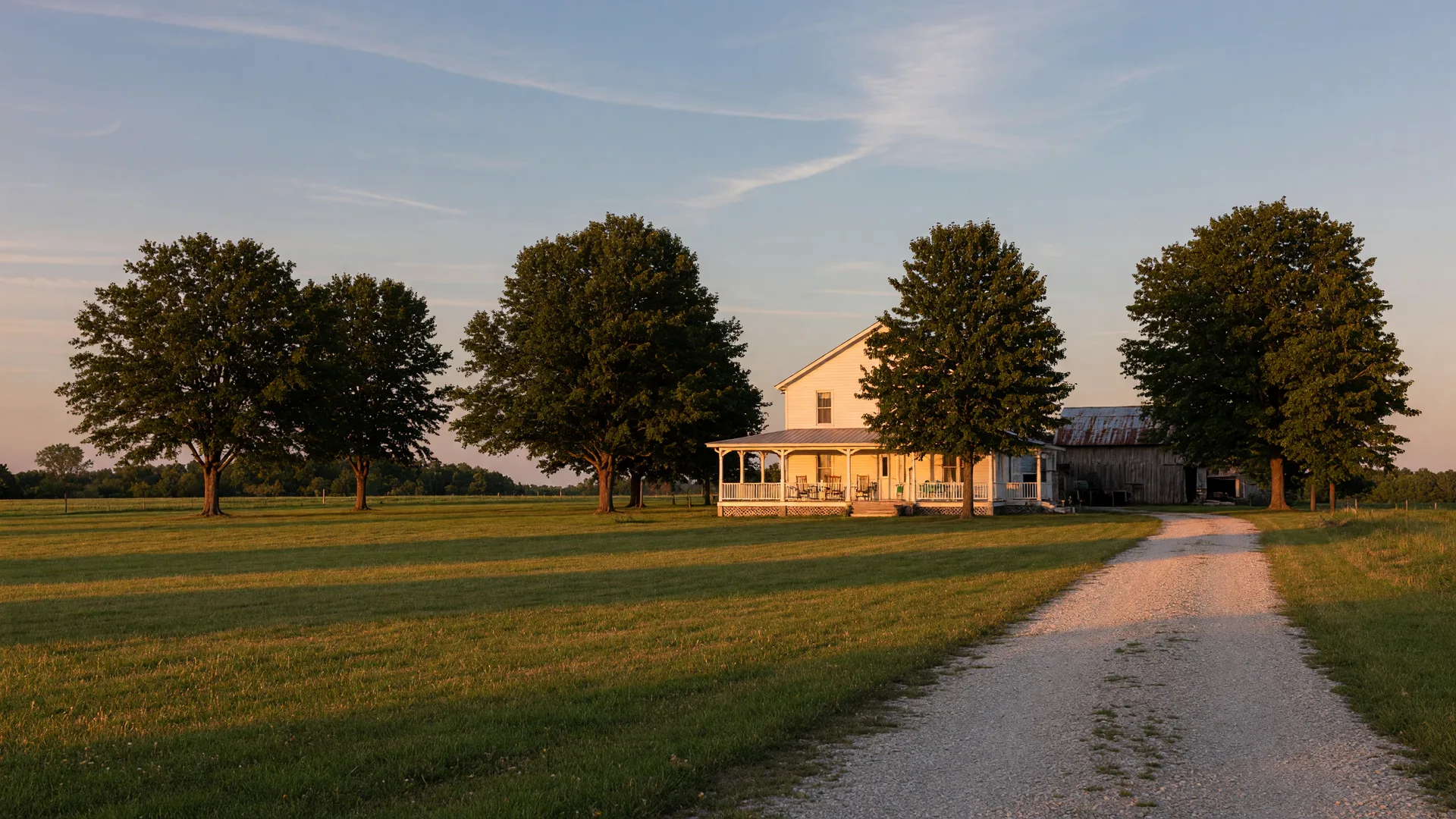
These are not scary questions. They are smart questions. The picture might show a gorgeous sunset over the back field but not that the daily drive is longer than expected, the internet will not support a work-from-home job, or the land does not function the way you thought.
The people who love rural life here really love it: slower mornings, privacy, more birds than traffic, kids growing up with space. The people who struggle usually loved the idea of rural life more than the reality of it.
Don't move here if you expect community without participating in it
One of the things people love about Kentucky is the people: the friendliness, the way somebody will talk to you in line at the grocery, the way neighbors can become friends, the way communities show up for ballgames, local events, school fundraisers, church functions, festivals, and small businesses.
But community is not something you just consume. It is something you join. If you move here and stay completely closed off, connection usually requires participation.
The people who settle in well are usually the ones who are curious. They ask where locals go for breakfast, what the best festival is, where to take family when they visit, what park kids like, and what the local thing is to experience. They do not just buy a house. They start building a life. The home is not the whole story. The home is the place where your new life starts.
Don't move here if you are running from something instead of moving toward something
A lot of relocation starts with frustration, but a good move cannot only be about what you are leaving. It also has to be about what you are building. If all you know is that you want out, you may make a rushed decision: the wrong town, the wrong type of property, the wrong commute, the wrong price point, the wrong lifestyle.
Ask yourself what you are actually moving toward: more space, more peace, a better place to raise a family, a lower cost of living, a stronger sense of community, a slower pace, a place to finally own land, a home where the kids can run outside, weekends that feel different.
Kentucky can offer a beautiful life, but you need to know what beautiful means to you: a farmhouse with acreage, a newer home five minutes from Target, a lake community, a historic home close to downtown, or being near schools, sports, grandparents, church, and a grocery store. None of those are wrong, but they are different lives. If you do not define the life first, you might buy the wrong house.
Who usually does love Kentucky
The people who love Kentucky are usually the ones who want space but still want connection, want affordability but understand that value is not just price, want a slower pace but are not expecting life to feel like a resort, appreciate local businesses, like community, and like being able to breathe.
They care about family, land, schools, church, sports, neighbors, lake days, porch nights, and having a little more room to live. They are not just asking what they can buy. They are asking what kind of life they can build.
A house listing can say three bedrooms, two bathrooms, two acres. It cannot tell you what it feels like to drink coffee on the porch while the kids are still asleep, what it feels like when your dog has room to run, when your mortgage does not make you feel trapped, or when a place finally feels like it fits.
How to know if Kentucky is right for you: five questions to ask yourself
Before you seriously look at homes, sit with these five questions. Write the answers down. They will do more for your move than any search filter or price range.
1. What do I want my daily life to feel like? Not vacation life or fantasy life, but daily life: where are you driving, where are the kids going, where are you grocery shopping, where are you working, where are you going on weekends.
2. Do I want convenience, space, or a balance of both? You can usually get some version of all three, but you need to know which matters most.
3. Am I prepared for the tradeoffs of the property type I say I want? Acreage sounds great, older homes sound charming, new construction sounds easy, a lake home sounds peaceful, downtown sounds fun. Every option has tradeoffs. Know them before you fall in love.
4. Am I choosing Kentucky because I understand it, or because I am frustrated with where I live now? Frustration may start the conversation, but it should not make the decision.
5. Who do I need around me? Family, schools, doctors, airport, church, sports, restaurants, work, friends. Map your real life before you map your home search.
Is Kentucky the life you are trying to build?
If you are still weighing it, that is exactly the right place to be. Comment KENTUCKY for the relocation fit checklist, and take it with you as you work through the questions above.
Whether you are moving to Bowling Green, South Central Kentucky, Warren County, Barren County, Allen County, Logan County, Simpson County, or somewhere nearby, call (270) 743-9975, email hello@livinginkentuckyteam.com, or book a Zoom at calendly.com/livinginkentucky.
Written where it happened
Questions like these are what Melissa answers daily for relocating families. If this post matches yours, send it her way and get the personal version.