 By Melissa Albert, Relocation Specialist with the Living in Kentucky Team, brokered by eXp Realty
Why the move is happening, on film
The economy is the biggest reason people are moving here, and Melissa filmed the whole list on location. Press play for her version, then read on for the honest wage picture.
The direct answer: yes, with one honest caveat
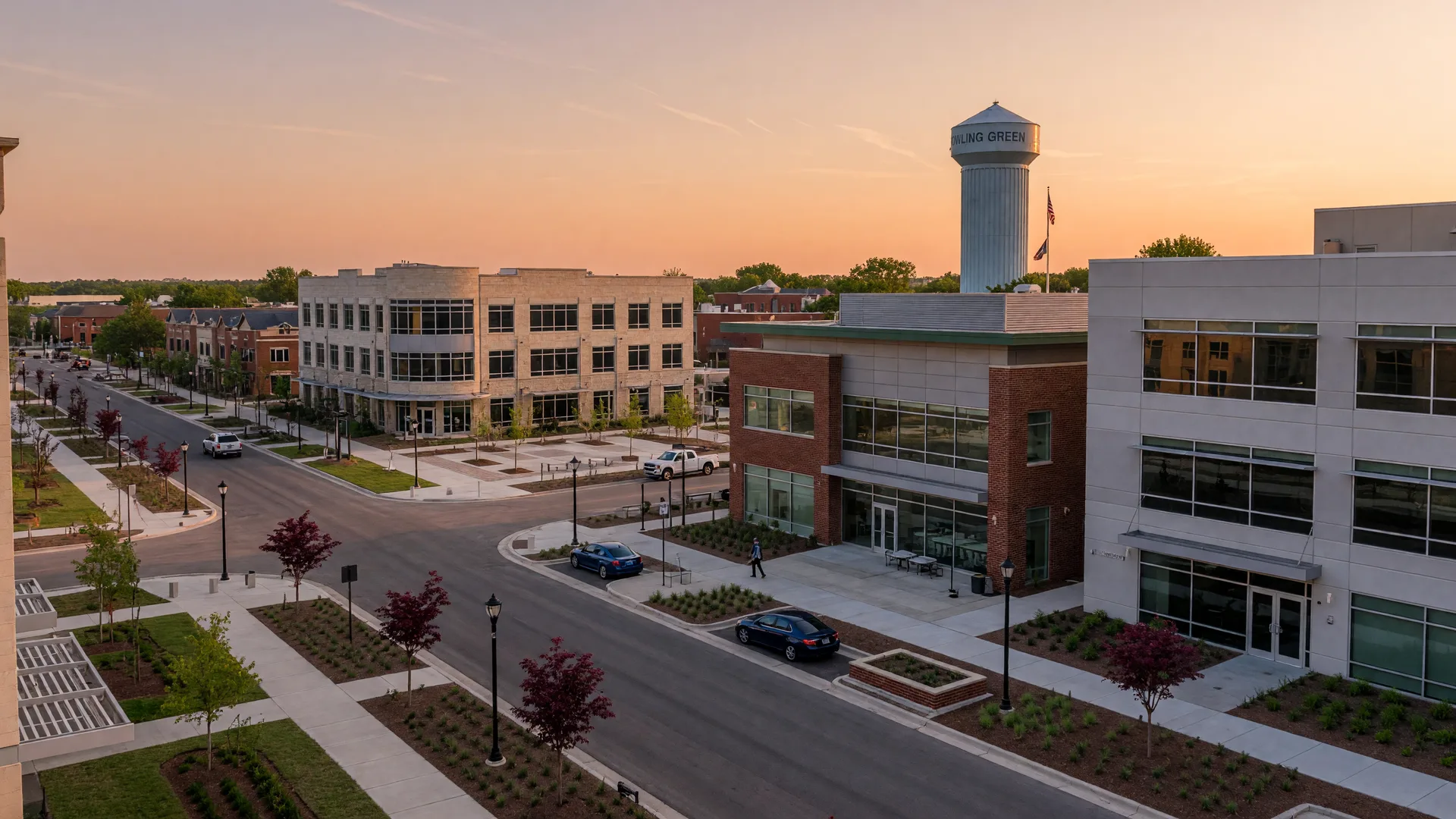
Bowling Green is one of the fastest-growing metros in the state, and jobs are part of the reason. Site Selection has named it the #1 U.S. metro under 200,000 population, the kind of recognition that brings companies in and, with them, openings.
The honest caveat is wages. The metro's average hourly wage runs around $26 an hour and the median wage sits near $45,000 a year, both below the national line. The right read is not that no good jobs exist here. It is that you should know the local wage curve before you romanticize the housing prices.
The big employers that anchor the economy
The economy rests on three legs: automotive and metals manufacturing around the GM Corvette Assembly Plant, Western Kentucky University, and regional healthcare led by Med Center Health.
The largest employers include Houchens Industries, Med Center Health, Warren County Public Schools, Western Kentucky University, Dart Container, Logan Aluminum, Fruit of the Loom and Bowling Green Metalforming. Between healthcare, education, manufacturing and a headquarters corridor, this is a varied market, not a one-company town.
The growth happening right now
New employers keep arriving. AKFA Aluminum Solutions announced its first U.S. plant here in December 2025 with roughly 330 jobs, ValorFlex Packaging opened a plant in mid-2025, and Caza Innovations moved its headquarters to Bowling Green in late 2025.
Tourism added a record economic impact in 2025, and the WKU campus keeps the talent pipeline full. The pattern is consistent: companies keep choosing this market, and openings follow.
What it actually pays, honestly
The median wage in the metro runs near $45,000 a year and the average hourly wage lands around $26, which is below the national figure. Pretending otherwise would be dishonest, so treat it as a real line in your budget.
The flip side is that housing runs roughly 28% below the U.S. average. A wage that looks modest on paper buys a house, a yard and often acreage here, which is why remote workers and skilled professionals do especially well: their income follows them, not the local curve.
How to job-hunt before you move
The Living in Kentucky Team helps relocating clients job-hunt from out of state every week, and the pattern that actually works is simple:
- Start with the big employers directly: Med Center Health for healthcare roles, WKU for education and administration, and the manufacturing employers for production, logistics and skilled trades.
- Use the remote angle if you have one. Companies based in Nashville or Louisville hire remote workers who live in Bowling Green's time zone with far lower housing costs.
- Network before the moving truck arrives. Local chambers, industry groups and the WKU alumni network open doors that job listings never will.
- Bring your current employer with you if you can. Transfers and remote arrangements are how many of the happiest newcomers keep their income and upgrade their life.
The commute and work-life trade-off
Most drives in this metro are short, which is a real quality-of-life line. The average one-way commute runs under 20 minutes, well below the national figure, so the time you gain back is yours every single day.
Nashville sits about an hour south on I-65, which matters for people who want big-city income options without big-city housing costs. The daily Nashville commute is a real choice, not a free one, but the option being there changes the math for many families.
Job market figures reflect the Bowling Green MSA from the U.S. Bureau of Labor Statistics, FRED and South Central Kentucky Economic Development reporting as of 2026. Wages, employers and openings change, so verify current specifics against live listings before you decide.
Written where it happened
Questions like these are what Melissa answers daily for relocating families. If this post matches yours, send it her way and get the personal version.