
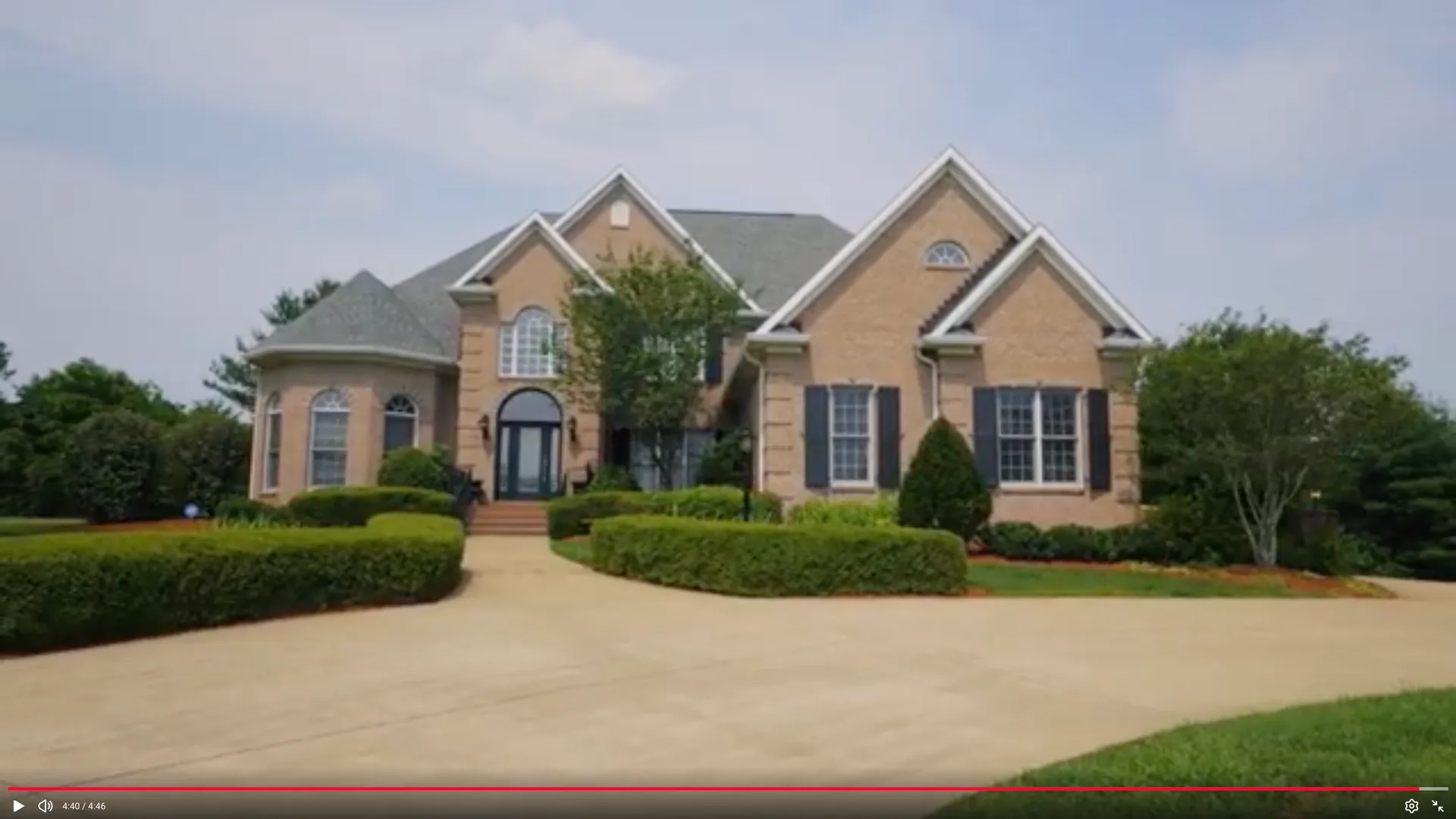
The market story, on film
Melissa filmed the bigger picture behind the numbers: why people keep moving to Bowling Green and Warren County even as the market cools.
If you've been watching the housing market in Bowling Green and Warren County, you may be wondering whether now is a good time to buy, whether sellers are losing leverage, or whether you should simply wait and see what happens with mortgage rates.
The September numbers give us a much clearer answer.
In August 2026, Warren County recorded 134 closed residential sales. In September, that dropped to 106, a decline of about 21%.
At first glance, that sounds concerning.
But sales volume is only one piece of the market.
The median sold price actually increased slightly, from $302,495 in August to $305,000 in September. The sale-to-list ratio also improved, from 95.84% to 96.64%.
In other words, we're seeing fewer transactions, but we're not seeing evidence of broad price deterioration.
Quick facts
- 106 closed sales in September, down about 21% from 134 in August
- Median sold price $305,000, up from $302,495
- Sale-to-list ratio 96.64%
- Approximately 673 active listings
- Approximately 145 pending
What we're really seeing: a more selective buyer
There are currently approximately 673 active residential listings in Warren County, while about 145 properties are pending.
Buyers have choices.
And when buyers have choices, they become less forgiving of homes that are overpriced, poorly presented or simply don't compare well with the competition.
We're seeing evidence of that too. September recorded 35 expired listings, compared with 28 in August.
The message for sellers isn't simply “lower your price.”
It's position the property correctly from the beginning.
Price matters, but so do condition, photography, presentation, marketing, competition and the buyer's perception of value.
“Warren County is sitting at roughly 6.4 months of inventory based on September's sales pace. That's moved us out of the tighter seller-favored market and into buyer-favorable territory. Buyers have more choices and more negotiating room, but that doesn't mean every seller is losing leverage. The best-positioned homes are still selling, so this is very much a market where strategy—and the specific price range you're in—matters.”
Is this just the normal fall slowdown?
Partially.
We went back and compared the same period in 2025.
Closed sales declined from 155 in August 2025 to 136 in September 2025, a decrease of about 12%.
So an August-to-September slowdown is not unusual.
What's different is the magnitude.
This year, sales declined approximately 21% from August to September, and September 2026 produced 106 closings compared with 136 in September 2025.
That's roughly 22% fewer closed transactions year over year.
Interestingly, the number of active listings in the snapshots is virtually identical: approximately 673 homes.
That suggests the bigger issue right now isn't simply an explosion of inventory. Fewer buyers are completing transactions.
So, should buyers wait?
This is where the conversation gets interesting.
The national average 30-year fixed mortgage rate reached 7.28% on October 1, 2026, according to Freddie Mac. My Home
Could rates move toward 8%? Yes. Could they move lower again? Also yes.
Nobody knows that path with certainty.
So I wouldn't make a housing decision based on trying to perfectly time mortgage rates.
Instead, I'd ask three questions:
Can I comfortably afford the payment today?
Am I likely to own the home long enough for buying to make sense?
Can today's slower market give me an opportunity to negotiate a better overall deal?
Because there's another side to higher rates: fewer competing buyers.
Depending on the property, today's buyer may have opportunities to negotiate price, repairs, closing costs, rate-buydown assistance or other terms that were much harder to get in a highly competitive market.
And if mortgage rates eventually fall enough to bring a large group of sidelined buyers back into the market, that negotiating environment could change.
Buying today and refinancing later is not guaranteed—future rates, qualification and refinance economics matter. But neither is waiting for a lower rate guaranteed to produce a better overall purchase.
What sellers need to understand
For sellers, this market rewards strategy.
The data isn't telling us that good homes can't sell.
It's telling us that buyers have become more selective and the cost of getting the positioning wrong has increased.
That means we need to look beyond an average days-on-market number. We need to understand the property's price range, location, condition, competition and likely buyer pool.
The question isn't simply:
“How long are homes taking to sell?”
The better question is:
“What is happening to homes like mine, at my price point, competing for my buyer?”
That's the market we're in.
And that's why local market data matters more than a national headline.
Market statistics: Warren County residential sales, Paragon MLS/RASK. Mortgage-rate information: Freddie Mac Primary Mortgage Market Survey.
Written where it happened
Questions like these are what Melissa answers daily for relocating families. If this post matches yours, send it her way and get the personal version.