 By Melissa Albert, Relocation Specialist with the Living in Kentucky Team, brokered by eXp Realty
The honest cons, including the weather
Melissa filmed the honest reasons people hesitate on Bowling Green, and the weather and storms are on that list, with the context that makes them manageable. Press play for her version, then read on for the full climate picture.
The short answer: four real seasons
Bowling Green sits in a humid subtropical climate, which means you get actual seasons without extreme versions of any of them. Springs are green and stormy, summers hot and humid, falls crisp and golden, and winters cold enough for a coat but rarely brutal.
The area averages roughly 50 inches of rain and about 8 inches of snow a year. If you are escaping snow country, you get the mildest winters in the Midwest without giving up a proper fall.
Summer: hot, humid, and absolutely normal here
July is the hottest month, with highs around 88 to 89 degrees and overnight lows near 68. Humidity is the part nobody warns you about enough, which is why air conditioning is universal and porches and pools are the summer lifestyle.
For newcomers from the South it feels familiar. For anyone from the desert or the coast, give yourself one summer to adapt and you will be fine. The flip side is that the hot season is bookended by genuinely lovely spring and fall.
Winter: mild, with the occasional surprise
January highs average in the mid-40s with lows near 27. Snow is light, around 8 inches a year, and big accumulations are the exception rather than the rule.
What surprises people is the freeze-thaw cycle: a 60-degree day followed by ice overnight. It is a small adjustment, not a reason to hesitate, and most years winter is short.
Storm season: the part to take seriously
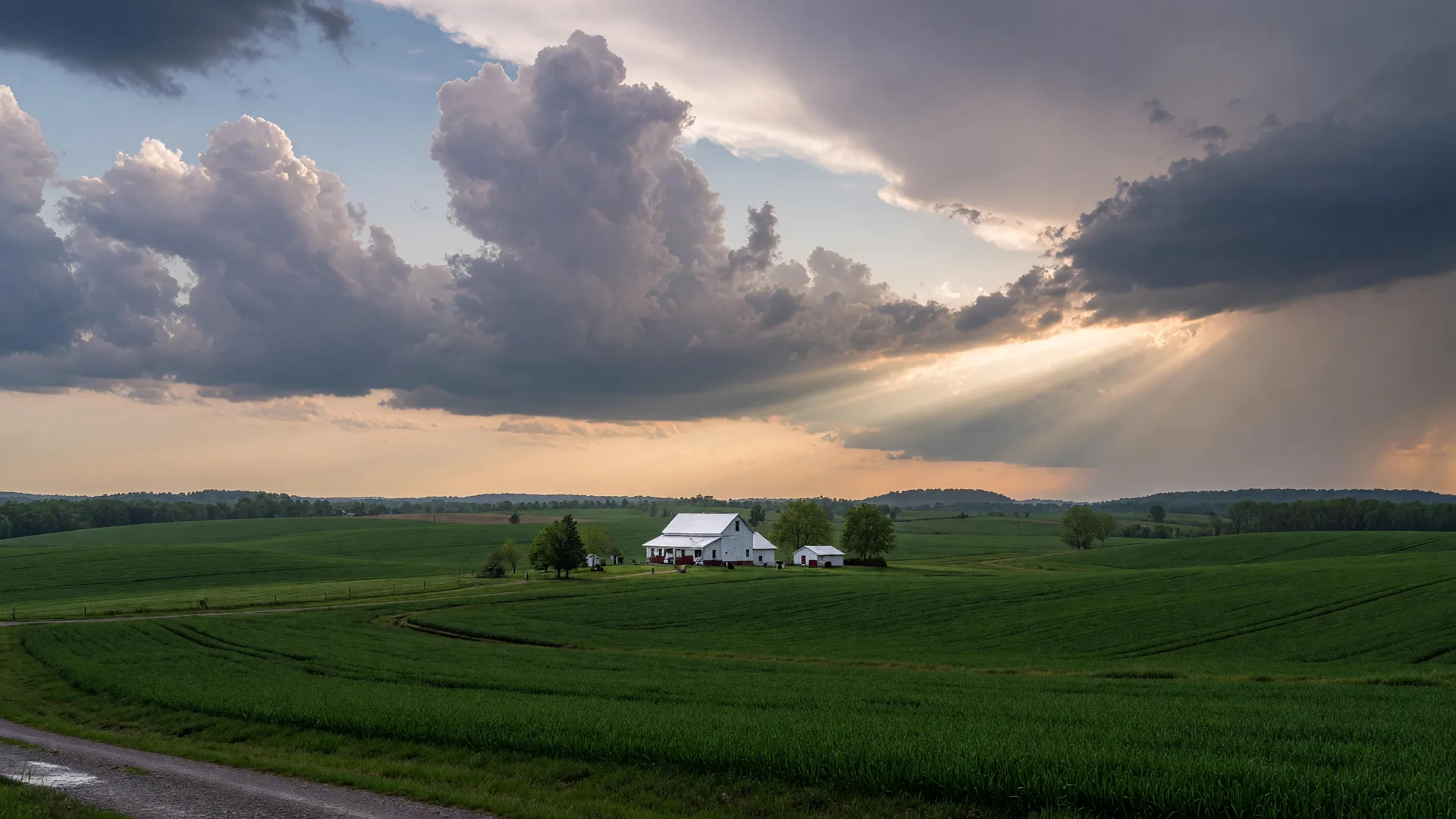
South Central Kentucky sits in what is often called Dixie Alley, a secondary tornado region, and severe weather season peaks in spring with a secondary window in fall. The December 2021 tornado that struck Bowling Green is the reason every local takes severe weather alerts seriously.
The encouraging truth is that preparation works. Weather alerts, a phone that wakes you, and a plan for where to shelter are the whole difference. The area also has no hurricane season, no wildfire season and no earthquake threat, which is more than much of the country can say.
How the seasons actually shape life here
Kentucky living is seasonal in a good way: baseball season in the spring, lake days at Barren River in the summer, football and the pumpkin festivals in the fall, and quiet porch weather in between.
Short commutes mean weather rarely keeps you from anything. And because the housing stock here is built for the climate, with central air and real insulation, a hot July or a rare ice day is an inconvenience, not a struggle.
Climate figures come from long-term Weather Spark and US Climate Data averages for Bowling Green; storm history comes from the National Weather Service and First Street Foundation. Averages smooth out individual years, so treat these as the shape of the climate, not a forecast.
Written where it happened
Questions like these are what Melissa answers daily for relocating families. If this post matches yours, send it her way and get the personal version.