 By Melissa Albert, Relocation Specialist with the Living in Kentucky Team, brokered by eXp Realty
Why people are making the move
Melissa filmed why families and renters are moving to Bowling Green and Warren County, from affordability to the lifestyle. Press play for her version, then read on for the full rental breakdown.
The short answer: rent runs well below the national average
Bowling Green is one of the most affordable rental markets in the region, and the gap shows up immediately in your monthly budget. The overall average rent in the city sits around $1,038 to $1,079 a month, while the national average rent is closer to $1,600. That difference, month after month, is real money you can put toward a down payment or a nicer place.
Housing is the single biggest reason the Bowling Green cost of living sits below the national average, and the rental market carries the same advantage as the for-sale market.
What rent actually costs in 2026
Rental data sites track slightly different averages, so think in ranges rather than one number. In 2026 a 1-bedroom typically runs about $815 to $900 a month, and a 2-bedroom runs about $1,050 to $1,225. Newer luxury complexes near the university or downtown can run higher, while older garden apartments and units out in the county come in lower.
If you are comparing to a big metro you are leaving behind, the numbers usually look like a rounding error on your old statement. That is the whole point of the move, and renters feel it right away.
- 1-bedroom: roughly $815 to $900 a month
- 2-bedroom: roughly $1,050 to $1,225 a month
- Citywide average rent, all unit sizes: about $1,038 to $1,079 a month
- Housing costs overall: about 28 to 30 percent below the U.S. average
Where to rent: the parts of town worth knowing
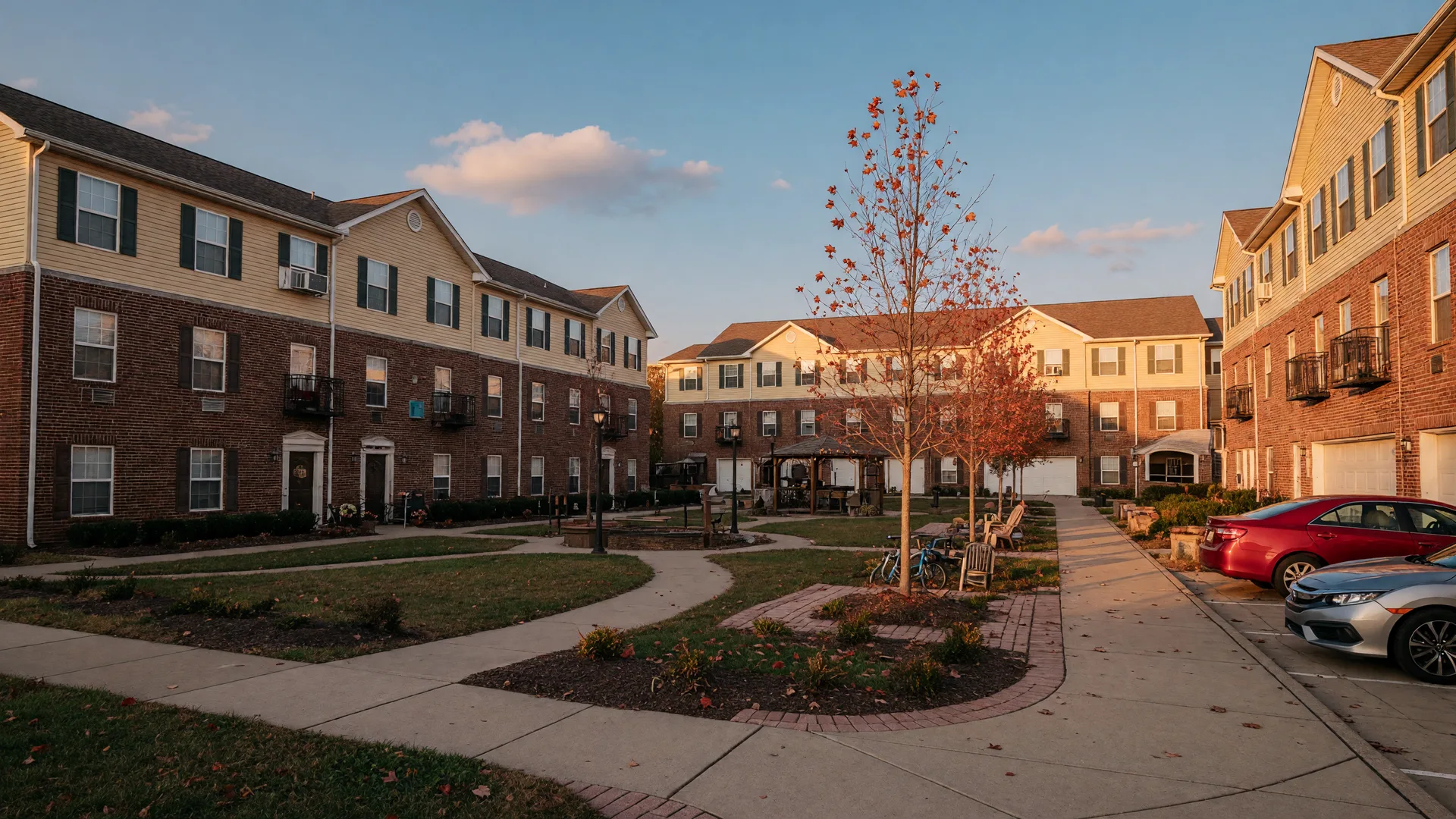
Bowling Green is small enough that you can realistically visit every rental hot spot in an afternoon, which is a huge advantage over big-city searches. Most rentals cluster in a few areas, each with its own character.
The right answer depends on your life stage: students and young professionals gravitate toward campus, families toward the quieter corridors, and everyone enjoys that the whole town is a short drive from anywhere else.
- The university district near WKU, along Fairview Avenue, Morgantown Road and Russellville Road: the most active rental corridor, walkable to campus, with the most options and the most student energy.
- Downtown Bowling Green: a one-bedroom averages about $1,012 a month here, and you trade a little quiet for walkable coffee shops, restaurants and the square.
- Chandler Park: a comfortable midtown pocket with one-bedrooms averaging about $989 a month, close to shopping and a short drive to campus.
- The Scottsville Road / 42104 corridor south of town: newer complexes with more space, convenient to the main shopping corridor and easy access to I-65.
Rent first, buy later: why so many newcomers do exactly that
The smartest strategy we see from out-of-state movers is to rent for the first lease term, learn the streets, then buy. A 12-month lease is the cheapest research you can do: you get to test a commute, feel the seasons and confirm which neighborhood actually fits before you commit a mortgage to it.
For comparison, the median home value in Bowling Green runs around $235,000 to $277,000 depending on the source. If you already know the area and plan to stay a few years, buying can make strong financial sense. If you are still learning the market, renting for a year costs far less than buying the wrong house.
Quick facts
- Median rent, all units: about $1,038 to $1,079 a month, versus a national average near $1,600
- Median home value in Bowling Green: roughly $235,000 to $277,000
- Utilities: run about 9 to 10 percent above the national average
- Housing costs overall: about 28 to 30 percent below the U.S. average
The fine print worth reading before you sign
A few practical notes make the search smoother. Utilities in Bowling Green run slightly above the national average, about 9 to 10 percent higher, so budget a little extra on top of the quoted rent. Near campus, many leases align with the WKU academic year, which makes summer the busiest window for openings and the best time to lock in a unit for a fall start.
Pet policies vary widely by complex, so if you are moving with a dog or cat, ask about breed and weight limits before you fall in love with a unit. And before you sign, drive the commute at the time of day you will actually make it: Bowling Green traffic is mild by metro standards, but the Scottsville Road corridor gets busy at rush hour.
The encouraging version
Bowling Green is one of those rare rental markets where a comfortable place still costs a fraction of what it does in a big city, and that frees up your first year to focus on the parts of the move that matter: the neighborhood, the school, the commute and the community.
Most renters who arrive unsure tell us the year of renting was exactly what they needed, and many end up buying in the same neighborhood they rented in.
Rent figures come from PadMapper, Apartment List, RentHop, Apartments.com and Apartment Finder averages for 2026, which vary by source and season; cost-of-living comparisons come from RentCafe and BestPlaces. Treat ranges rather than single numbers as the honest answer.
Written where it happened
Questions like these are what Melissa answers daily for relocating families. If this post matches yours, send it her way and get the personal version.