
Skip to content

Home / Homeowner Guide

Homeowner guide · Winter

Winter Home Maintenance Checklist for Bowling Green Homeowners

The practical, no-nonsense winter maintenance plan for a Bowling Green home: furnace, pipes, gutters, roof, windows and safety checks, each with what to do, when to do it, and how the South Central Kentucky climate changes the timing. It ends with a free printable checklist you can keep on the fridge and check off one line at a time.

  • One afternoon before the first hard freeze
  • Most of it needs no special skills
  • Safety checks come first

Seasonal guide

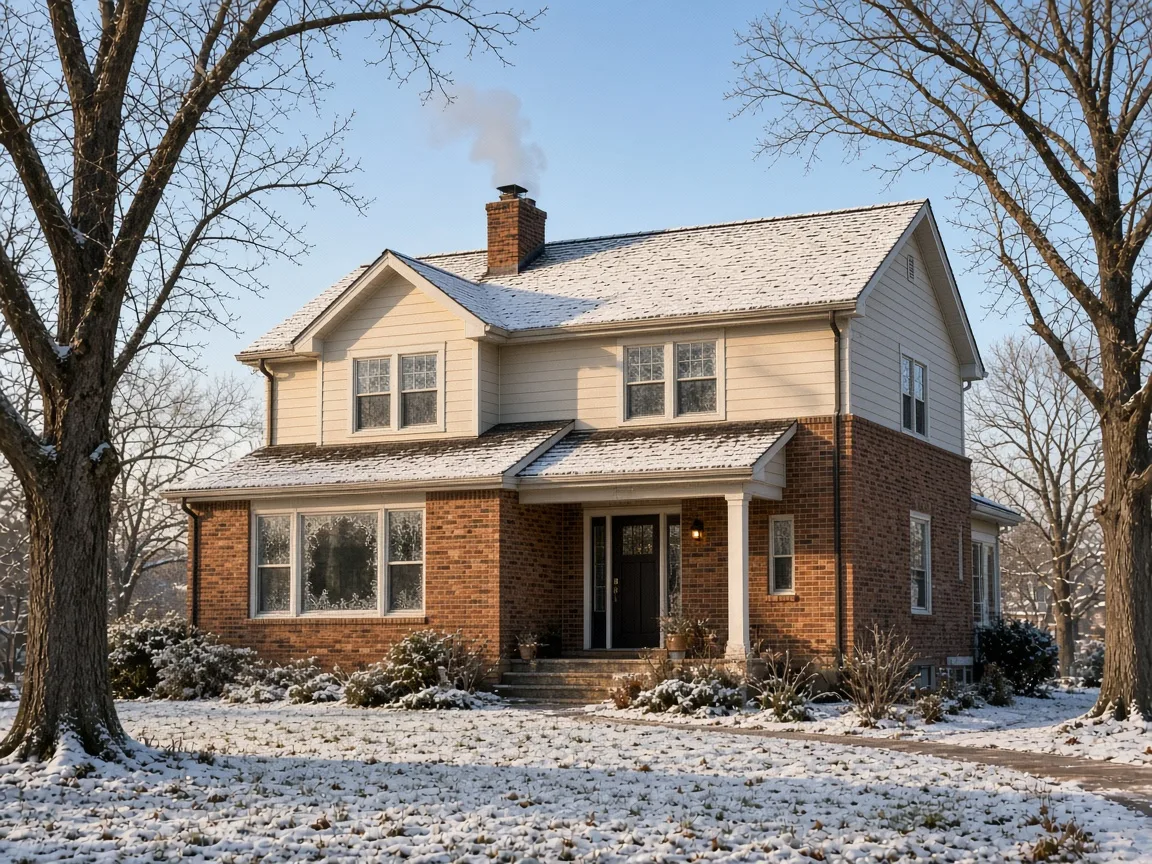
A brick and siding home in Bowling Green on a clear winter morning, light snow on the roof and a thin curl of chimney smoke in a pale blue sky

Why this checklist exists

A Kentucky winter rewards the boring preparation

Bowling Green winters are not an endurance test, but they run on their own rhythm. From late November through mid-March the forecast cycles through cold snaps, freeze-thaw stretches and the occasional ice event, and a house that sailed through October can collect a list of small problems by January. Nearly all of them are preventable, and most start the same way: a gutter, a pipe or a seam in the roof was not ready for the first hard freeze.

This checklist is built for that rhythm. Work the six categories once, before the season's first real cold snap, and the maintenance between Thanksgiving and the last frost should be a string of boring twenty-minute jobs instead of a few bad surprises. You do not need to be handy; you need an afternoon, a ladder you trust, and the number of a good local pro for the handful of jobs that call for one.

The full printable version is at the bottom of this guide: six categories, concrete checkboxes, one page. Print it once, keep it on the fridge, and check a line each weekend.

Winter home maintenance essentials on a workbench: a fresh air filter, weatherstripping, batteries, gloves and a small checklist notepad
Most of the season's big problems start with small, cheap parts: a filter, a battery, a strip of weatherstripping.

The six categories

Furnace, pipes, gutters, roof, windows and safety checks

Furnace

Your furnace works harder between Thanksgiving and the last frost than every other system on this list combined, and it is the one you cannot put off. Most furnace trouble starts with three small things you can fix yourself in an afternoon.

  • Swap the filter once a month while the heat is on. A dirty filter is the most common reason a furnace short-cycles, runs cold or never seems to stop, and it is the cheapest repair on the whole list.
  • Test the thermostat and change its battery before the season starts. If the heat goes quiet on the coldest night of the year, the thermostat battery is the first place to look.
  • Keep vents, registers and returns clear of furniture, rugs and pet beds. Warm air cannot reach a room when the register is under the couch.
  • Book the annual tune-up in September or October. Every HVAC shop in Warren County has open calendars before the first cold snap and a packed one in late December; get on the early list.

Pipes

A frozen pipe here is rarely about deep-Alaska cold. It is a hard snap arriving after weeks of mild weather, when a hose is still attached or a crawlspace line was never covered. Prevention takes about fifteen minutes.

  • Disconnect and drain garden hoses, then shut off and drain exterior spigots if your house has valves for them. A hose left attached gives ice a straight path back into the wall.
  • Insulate exposed pipe in crawlspaces, garages and unheated rooms. Foam pipe sleeves are a few dollars a foot, and they are the whole job.
  • Find your main water shutoff now, while nothing is wrong, and show everyone in the household where it is. When a pipe bursts, you want the decision made ahead of time.
  • On nights in the teens, let the faucet farthest from the water heater drip and open the cabinet doors beneath the sinks. Moving water in the lines almost never freezes solid.
  • If a pipe does freeze, open the faucet and warm the pipe gently with a hair dryer, starting from the faucet end. No open flames, and stay near the shutoff in case it bursts.

Gutters

Kentucky fall drops a mountain of leaves into the gutters, and Kentucky winter turns a clogged gutter into an ice dam. Water that cannot drain has nowhere to go but over the edge, behind the gutter and into the fascia.

  • Clear leaves and debris before the first hard freeze, then make one last pass after the big November leaf drop. The second pass is the one that saves the edge of the roof.
  • Confirm downspouts empty a few feet away from the foundation. Water dumping against the slab in January is how February comes with a wet basement.
  • Tighten loose brackets and reattach sagging sections while they are empty. Ice will pull apart what leaves could not.
  • After a freeze-thaw stretch, look for ice dams over entries and upstairs windows. If icicles hang straight off the gutter line, the gutter is telling you it is full.

Roof

A roof is not a winter project; it is a winter watch. You are not replacing shingles in January. You are catching small problems in daylight, before a February ice event turns them into big ones.

  • After every wind or ice event, check the roofline from the ground with binoculars or a zoomed phone photo. Most roof damage is visible without ever leaving the yard.
  • Look at flashing around the chimney, vents and skylights for lifting or rust. Winter leaks start at the seams, not in the middle of the field.
  • Trim branches that overhang the roofline before ice weighs them down. A branch full of ice weighs several times what it did in July.
  • In the attic, watch for streaks on the underside of the roof, damp insulation or daylight through the sheathing. Those quiet signs are much easier to handle before the snow flies.
  • If heavy snow piles up, use a roof rake from the ground. Never climb an icy roof; the ladder is the most dangerous tool on this list.

Windows

Windows are where a Kentucky winter shows up as a draft on your ankle and a fogged pane. A lot of Bowling Green stock is older homes with real character and single-pane glass, so the cheapest upgrade on the list is often weatherstripping.

  • Run a hand around the trim on a windy day. If you feel a draft, the seal or the weatherstripping has given up the fight.
  • Add or replace weatherstripping around sashes that rattle or let light through. It is the cheapest warmth you can buy, and it goes in without tools.
  • Caulk gaps where the frame meets the siding, but only on windows in good repair. Caulk is not the fix for a rotted frame; that is a window pro job.
  • Take window AC units out or cover them for the season. A covered unit still pours cold air straight into the wall cavity.
  • Work the sun: open curtains on south-facing windows during the day and close them at night. Free heat at noon, free insulation after dark.

Safety Checks

Everything above protects the house. This category protects the people in it, and it is where the list should start, especially if winter is already here and you are playing catch-up.

  • Test every smoke detector and carbon monoxide detector and replace the batteries. If you cannot remember the last time, that is the answer.
  • Check the fire extinguisher: gauge in the green, tamper seal intact, within reach of the kitchen and the garage door.
  • Clear snow and ice from the exterior vents, the dryer, furnace and water heater exhaust, after every storm. A blocked vent can push exhaust back into the living space.
  • Stock a small winter kit: flashlights with fresh batteries, blankets, bottled water and a phone charger, in a spot the whole household knows.
  • Put ice melt or sand on steps, walks and the driveway before anyone is up on a cold morning, and keep the shovel by the door.
  • Save utility outage numbers and the local emergency contacts where everyone can see them, on the fridge or by the back door.

When to call the pros

Trusted local service categories

We do not keep a paid list of preferred vendors, and we are not going to rattle off business names we have not vetted. What we can give you is the honest map of which trade does which job, when a typical Bowling Green home needs them, and how to find a good one the old-fashioned way: a neighbor's recommendation, two quotes and a clear scope.

HVAC

For the annual furnace tune-up, and any time the system short-cycles, runs constantly or blows cool. Book in September or October while calendars are open; a January call is triage.

Plumbing

For a frozen or burst pipe, a water heater that stopped keeping up, and exterior spigots you would rather not winterize yourself. Slow drips belong on this list too; they freeze faster than you expect.

Roofing

For storm damage, lifted or missing shingles, and any leak where flashing meets a chimney or vent. Roofing crews fill up around spring storms, so go early.

Gutter and window pros

When gutters sag, pull away from the roofline or empty against the foundation, and when windows no longer seal, fog between panes or need replacing. Two trades; hire the one your house actually needs.

Chimney sweeps

Once a year if you burn wood, before the first fire of the season, and any time animals, soot or a downdraft have been getting in. A capped, swept chimney keeps the heat where it belongs.

How to pick one

Bowling Green is the right size to do this the old-fashioned way: ask your neighbors, ask the people you work with, and ask whoever just rebuilt their house who they trusted. Get two or three names, ask what the job cost and how the crew left the site, and book before November if you can. The best referral in town is still a neighbor who keeps an eye on your house.

Stay in the know

Get Local Updates

Seasonal guides, upcoming events, and the best of Bowling Green, delivered to your inbox.

No spam, no pressure. Just the best of Bowling Green, one friendly email at a time.

Relocating to Kentucky? Let's make the move simple.